

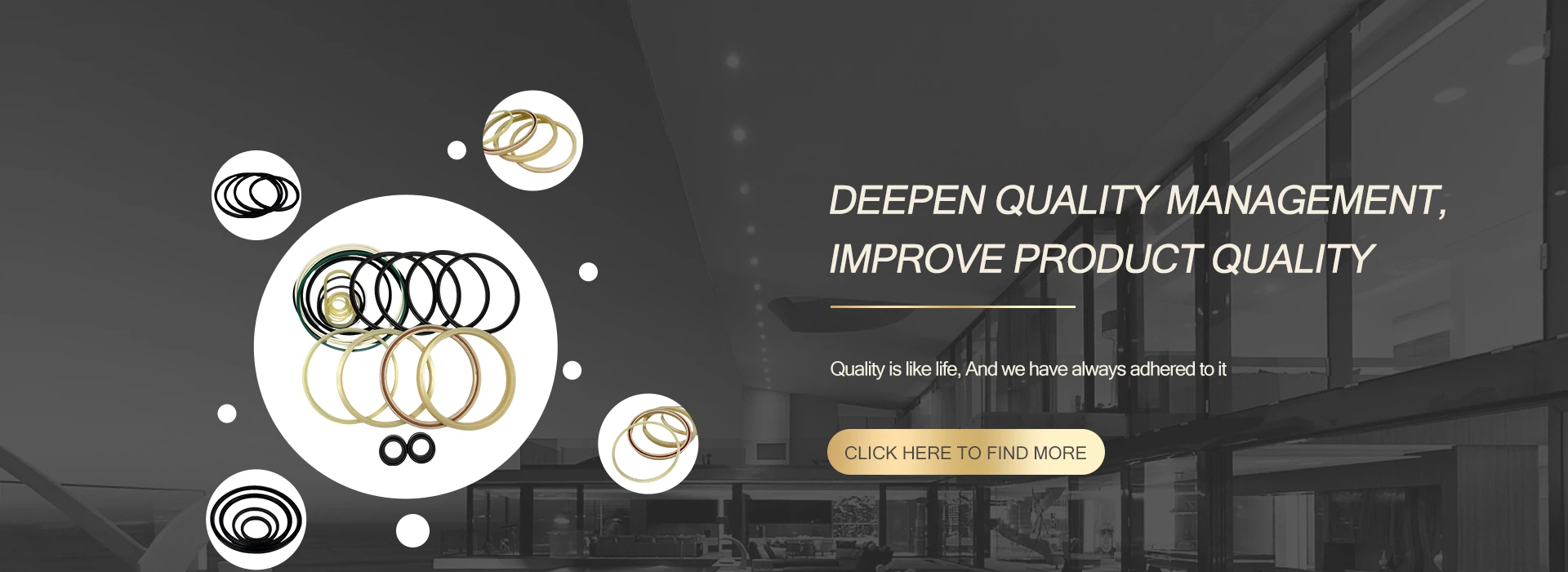
BK.B.C.T Oil Seal
Tian Jin Natebell Sealing Technology Co.,ltd. was founded in 2009, mainly engaged in construction machinery, excavators, hydraulic hammers and other sealing products. Annual output value of 100 million yuan. Registered trademarks are KEDIAS, B.K.S brand, but also the NOK contracted dealers. We have developed more durable and suitable sealing materials for various harsh working conditions, focusing on providing you with comprehensive hydraulic sealing system solutions. Additionally, we have a perfect, scientific quality management system, as well as proper after-sales service. As one of the leading oil seal manufacturers and suppliers in China, all of our customized products are with high quality and competitive price. We are your trusted partner, providing high-end products and making you different!
Why Customers Choose Us?
High Quality
Based on material development, combined with decades experience on seals design, production and application, all products are verified with professional laboratory and bench testing. We have a perfect QC system for the perfect products. A team who will detect the product quality and specification piece carefully, monitoring every production process until packing is complete, to ensure product safety into container. Additionally, we have independently developed the KEDIAS brand Breaker hammer seal and jointly developed a sealing structure with high temperature resistance, focusing on providing you with comprehensive hydraulic sealing system solutions.
Professional Team
At present, our company has more than 70 employees, including 10 graduate degree, more than 40 bachelor's degree. With the Hebei University of Technology School of Materials, we jointly develop materials with high temperature, super wear-resistant, longer service life sealing structure.
Advanced Equipment
Our company is a comprehensive enterprise with perfect sealing research and development and production capacity. The company has a total of 24 turning and sealing machine tools, 15 injection molding machines, 6 PTFE hydraulic presses, various rubber vulcanizing machines, and the company's independently developed guide belt production line. Also we have clear division of labor, strict quality inspection and a full set of storage system.
Rich Experience
Parker Seals has involved in the research and development, production, manufacturing and sales of construction machinery seals more than 15 years. We have become experts in hydraulic breaker parts and excavator components. Rely on our knowledge and expertise to find the right parts for your equipment.
Wide Market
At present, we have more than 3,300 dealers nationwide, and now cooperate with XCMG, SANY ZHONGLI, EDDIE PRECISION, BELITE, BEST, DAEKKO and other large construction machinery Original Equipment Manufacturer. And exported to the Middle East, Southeast Asia, Africa and other 40 countries and regions.
Superior Service and Logistics
We understand the importance of timely repairs and maintenance. Our customer service team is available and dependable to provide support and solutions to customers at all times. Benefit from our fast and reliable delivery service, ensuring that your hydraulic breaker parts and excavator components arrive on time.


Brief Introduction to Bk.B.C.T Oil Seal
BK.B.C.T oil seals are a type of oil seal designed for various industrial applications, including hydraulic systems. These seals are known for their durability and ability to withstand high pressures and temperatures commonly encountered in hydraulic equipment. They are designed to prevent leakage of hydraulic fluid and maintain the integrity of the hydraulic system.
The Types of Bk.B.C.T Oil Seal
Radial Shaft Seals
Radial shaft seals, also known as lip seals or rotary shaft seals, are the most common type of oil seal. They are used to seal rotating shafts and prevent the leakage of lubricants or fluids. Radial shaft seals typically consist of an outer metal case, a flexible sealing lip, and a spring to maintain pressure against the shaft.
Rubber Oil Seals
Rubber seals are the most common types of sealing solutions preferred for tight sealing. Rubber seals are corrosion resistant and are used in both high and low-pressure applications. Nitrile, polyacrylate, Viton®, silicone, and polytetrafluoroethylene are a few common types of rubber materials used for this purpose. Each material possesses the typical capability, so, you must choose the rubber material carefully for your application.
Metal Cased Oil Seals
These seals feature stamped metal cases with an elastomer bonded sealing lip. Carbon steel is the metal used for making the case. The case protects the lip seal during installation. Metal encased seals are generally used for high-pressure or high-temperature applications.
Leather Oil Seals
These seals possess good running properties and are generally preferred for abrasive applications. The seals are usually used for shafts that possess surface roughness higher than rubber seals.
What Benefits Do Bk.B.C.T Oil Seals Provide?
Low Levels of Friction
The lubrication within the seal ensures that the seal lip does not come into contact with the rotary shaft, eliminating the risk of burning or wear.
01
Compact Size and Lightweight
Oil seals possess a small and lightweight design, which belies their strong endurance capabilities.
02
Reliable, Rugged Performance
Even under harsh conditions or extreme temperatures, these durable components will maintain their seal.
03
Simple Construction
Easy to handle and assemble, oil seals only take a matter of minutes to replace as technicians do not have to take a machine apart.
04
Versatility
Standard lip seals are best for applications within dry environments, or those lacking lubrication. Oil seals can act as an alternative with increased functionality.
05
Lubricant
If choosing lubricated seals ensure they are continuously lubricated with oil that possesses appropriate viscosity required for the application and the lubricant is compatible with the elastomer material of seals.
Shaft Finishing
A good surface finishing of shafts gives a very effective oil sealing. The ground or polished shafts with concentric finish marks provide the best sealing that prevents leakage even during the shaft rotations. Hence, it is important to make sure that the shaft finishing is well maintained.
Shaft and Bore Tolerance
The seals must be strong enough to tolerate the pressure and vibrations caused by shaft and bores. The authenticity of metal and elastomer material is something that makes the shaft and bore tolerance possible. Therefore, check if the material meets these requirements before buying the seal.
Shaft Hardness
The life expectancy of a seal is measured on the basis of the hardness of its shaft. A shaft must possess a Rockwell hardness of 30 or above. When a seal is exposed to abrasive contaminants or high pressure, this RC hardness protects the seal from getting damaged. Hence, it is an essential factor.
Temperature
The temperature of the process should not exceed the temperature of the seal elastomer. Any increase or decrease in temperature may affect the sealing capability of the seal. Hence, it is an important point to be considered.
Pressure
Most seals are designed for applications where they may be subjected to pressures as low as 8 psi. However, if they are subjected to even low pressures then pressure relief must be ensured.
Shaft Speed
Shaft speed depends on many factors including shaft finish, its concentricity, the type of liquid being transferred, and the type of oil seal material. So each of these factors must be considered to achieve a maximum shaft speed.
Oil Seal Storage, Handling, and Mounting

Storage
Keep at room temperature (max. 30°C) and humidity 40 to 70% on average.
Avoid direct sunlight.
Do not hang them (to prevent lip deformation and failure).
Store in a tightly sealed container and protect from contaminants such as dust and sand.
If storing for a long time, use the ones with the earliest manufacture date first.
Handling
When carrying, avoid excessive impact.
When opening the wrapping with a sharp object such as a knife, do not damage the seals.
Do not leave seals out on a table (to prevent the adhesion of contaminants).
Do not hang them (to prevent lip deformation and failure).
Use kerosene for cleaning.
Using abrasive cleaners, solvents, or the like will negatively affect the rubber material.
Mounting
1.Before mounting, confirm that there is no dirt, no foreign particles, and no damage on the seals. Prevents the entry of foreign matter.
2.Feed lubricant for pre-lubrication (initial lubrication).
• Use clean lubricant for the lip.
• Use clean grease between the main and minor lips.
3.Recommended grease to be used between the main lip and the minor lip:
• Soft grease (small penetration)
• Small penetration change by temperature
• Wide serviceable temperature range
• Lithium base type
4.When the seal is mounted in a cold area, it should be warmed up and its lip flexibility restored before mounting.
5.Prevents abnormal contact between the lip and the shaft.
6.When the seal is pressed into a housing bore, use a pressing jig and mount it perpendicularly to the shaft and avoid failures such as scuffing on the fitting surface.
7.If removing the oil seal, use a new oil seal and spacer so the sealing edge doesn't overlap with the trace of the previous lip.

Analyzing the Top 3 Reasons for Failure of Oil Seals and Corrective Actions
Chemical Attack
As said, the oil seals are exposed to several types of chemicals. The seal may exhibit a variety of signs ranging from cracking, blisters, and discoloration to a change in hardness levels. Why does this happen? The material of your seal is not compatible with the chemicals it is being exposed to. This chemical attack will affect its cross-link density, increasing or decreasing it. The seal material becomes hard and brittle when this cross-link density increases and becomes softer when the cross-link density decreases.
Solution: Selection of the right sealing material is important for ensuring the compatibility of the seal with chemicals. This chemical incompatibility leads to chemical attacks, which accelerate at high temperatures or pressures. So, check the compatibility of the elastomer seal material before choosing it for your application.
Extrusion and Nibbling
At times, the oil seals may have a chipped or nibbled appearance. In extreme cases, the surface of these seals may peel on its own, thereby lending it a shaved appearance. What is the cause of extrusion and nibbling? Stress induced by high pressure is one of the main reasons for extrusion and nibbling. This stress widens the clearance gap between the mating edges, where the seal may get entrapped, and it leads to severe physical damage.
Solution: Many industry experts suggest using backup devices to avoid the formation of clearance gaps between the mating edges. The selection of a properly sized oil seal is also important to avoid extrusion and nibbling.
Out-gassing
This is one of the common causes of oil seal failure, which happens due to the volatility of any of the constituents of the elastomer. These constituents may be the part of elastomer formulation, or gases may get trapped in the elastomer during the process of molding. Although the oil seals may not show any visual indications of out-gassing, at times they may shrink due to extreme out-gassing. The out-gassed molecules may cause contamination in wafer processing in several semiconductor applications, and also it can affect vacuum performance in industrial applications.
Solution: Use the materials that are rated to the temperature of application. Also, ensure that the elastomer used is free from volatile ingredients such as waxes, plasticizers, and so on.
Our Factory


Ultimate Guide
As one of the leading bk.b.c.t oil seal manufacturers and suppliers in China, we warmly welcome you to buy discount bk.b.c.t oil seal in stock here and get pricelist from our factory. All customized products are with high quality and competitive price.
Nok Oil Seal for Hanwoo Breaker, SB40 SB43 SB50 SB81 SB81N SB121 SB131 SB151, DMB-210