


NOK Oil Seal
Tian Jin Natebell Sealing Technology Co.,ltd. was founded in 2009, mainly engaged in construction machinery, excavators, hydraulic hammers and other sealing products. Annual output value of 100 million yuan. Registered trademarks are KEDIAS, B.K.S brand, but also the NOK contracted dealers. We have developed more durable and suitable sealing materials for various harsh working conditions, focusing on providing you with comprehensive hydraulic sealing system solutions. Additionally, we have a perfect, scientific quality management system, as well as proper after-sales service. As one of the leading oil seal manufacturers and suppliers in China, all of our customized products are with high quality and competitive price. We are your trusted partner, providing high-end products and making you different!
Why Customers Choose Us?
High Quality
Based on material development, combined with decades experience on seals design, production and application, all products are verified with professional laboratory and bench testing. We have a perfect QC system for the perfect products. A team who will detect the product quality and specification piece carefully, monitoring every production process until packing is complete, to ensure product safety into container. Additionally, we have independently developed the KEDIAS brand Breaker hammer seal and jointly developed a sealing structure with high temperature resistance, focusing on providing you with comprehensive hydraulic sealing system solutions.
Professional Team
At present, our company has more than 70 employees, including 10 graduate degree, more than 40 bachelor's degree. With the Hebei University of Technology School of Materials, we jointly develop materials with high temperature, super wear-resistant, longer service life sealing structure.
Advanced Equipment
Our company is a comprehensive enterprise with perfect sealing research and development and production capacity. The company has a total of 24 turning and sealing machine tools, 15 injection molding machines, 6 PTFE hydraulic presses, various rubber vulcanizing machines, and the company's independently developed guide belt production line. Also we have clear division of labor, strict quality inspection and a full set of storage system.
Rich Experience
Parker Seals has involved in the research and development, production, manufacturing and sales of construction machinery seals more than 15 years. We have become experts in hydraulic breaker parts and excavator components. Rely on our knowledge and expertise to find the right parts for your equipment.
Wide Market
At present, we have more than 3,300 dealers nationwide, and now cooperate with XCMG, SANY ZHONGLI, EDDIE PRECISION, BELITE, BEST, DAEKKO and other large construction machinery Original Equipment Manufacturer. And exported to the Middle East, Southeast Asia, Africa and other 40 countries and regions.
Superior Service and Logistics
We understand the importance of timely repairs and maintenance. Our customer service team is available and dependable to provide support and solutions to customers at all times. Benefit from our fast and reliable delivery service, ensuring that your hydraulic breaker parts and excavator components arrive on time.


Brief Introduction to Nok Oil Seal
An oil seal generally consists of an outer circular metal part and an inner flexible member that does the actual sealing and is bonded to the metal part by chemical adhesive agents. The sealing member is made of rubber, either synthetic or natural as the case may be. The sealing lip of the flexible member is prepared by cutting away the flash that forms at the sealing edge during molding. A fine sealing edge provides adequate pressure on the shaft to prevent leakage.
The Types of Nok Oil Seal
Rotary Shaft Seal
These seals protect bearings from impurities and prevent lubrication leakage in rotating machinery part. They guarantee that the machine’s moving components run smoothly and last long.
Hydraulic Seal
Hydraulic Seals are often used in hydraulic cylinders and designed for high-pressure settings. They protect fluid systems by preventing fluid leakage at excessive pressure.
Axial Seal
Axial seals are important components in pumps and values since they are used largely for axial motions. They offer excellent sealing in applications where pieces move parallel to the seal axis.
Static Seal
These types of seals are ideal for circumstances when the sealing pieces move very little or at all. Static seals keep a seal in place while stationary, avoiding leakage in fixed joints.
Cassette Seal
Cassette seals are preassembled units that combine a radial shaft seal with a V-ring seal for enhanced sealing performance.
Custom Seal
When regular seals fail to suit the unique needs of a particulate application, custom seals are the go-to answer. They are custom-made to match specific dimensions and circumstances, producing excellent sealing performance.
the final view of project


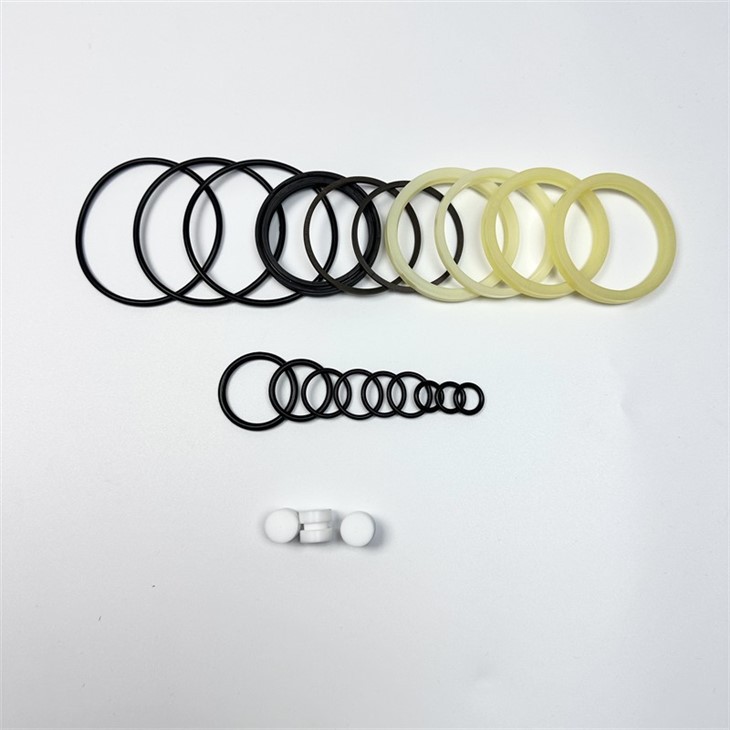
Prevent the Entry of Foreign Contaminants
Oil Seals serve as a prevention method ensuring that no foreign objects such as dirt and soil enter your equipment. When the shaft rotates, the lip portion of the oil seal will dynamically adjust as the shaft rotates, always maintaining a tight fit with the shaft, thereby preventing contaminants from entering through the rotation gap. The lip part of the oil seal also has a certain scraping ability, which can scrape off tiny particles or contaminants attached to the shaft and keep the shaft clean.
Prevent Seal Leakage
The main function of the oil seal is to seal. It forms an effective sealing barrier between the rotating shaft and the fixed component to prevent lubricating oil from leaking. The lip portion of the oil seal fits tightly on the shaft, forming a dynamic sealing interface that maintains the sealing effect even when the shaft rotates.
Maintain a Bearing’s Lubricity
Oil seals help reduce bearing friction and wear and extend bearing life. At the same time, good lubrication can also reduce the temperature and noise of bearing operation and improve the overall performance of the equipment.
Long Shelf Life
Oil seals are usually made of materials with excellent anti-aging properties, such as weather-resistant rubber or special synthetic materials. These materials remain stable under different temperature, humidity and light conditions and are not prone to hardening, cracking or deformation.
Easy Assembly
Oil seals often feature simplified designs that reduce the tools and steps required for installation. For example, some oil seals may have easy-to-align markings or guides that allow the user to easily place the oil seal onto the shaft without the need for complicated adjustments or positioning.
Strength Property
Oil seals are utilized in mechanical environments that must function under extreme pressure. This concept often applies to temperatures in which oil seals must operate. With its high degree of flexibility and use in various industries, oil seals must be able to work optimally in temperate conditions of - 70°C and +260°C.
Selecting the Right Oil Seal
Operating Conditions
Consider the temperature, pressure, and general environment where the seal will be employed. These criteria have a significant impact on the seal selection.
Shaft Speed
Think about how quickly the shaft rotates. Different speeds may necessitate different types of seals for optimal performance.
Fluid Type
The type of fluid encountered by the seal is critical. This determines the best seal material for compatibility and durability.
Temperature
The temperature range of the mechanism in which the seal is installed must not exceed the temperature range of the seal elastomer.
Pressure
Most conventional oil seals are designed only to withstand very low-pressure applications (about 8 psi or less). If additional internal pressure is present or anticipated, pressure relief is necessary.
Shaft Surface Finish
Most effective sealing is obtained with optimum shaft surface finishes. The sealing efficiency is affected by the direction of the finish tool marks and the spiral lead. Best sealing results are obtained with polished or ground shafts with concentric (no spiral lead) finish marks. If you must use shafts with spiral finish leads, they should lead toward the fluid when the shaft rotates.
Oil Seal Installation
Preparation
Before fitting the oil seal, it is essential to check that the oil seal, shaft and bore are clean and undamaged. The surfaces the oil seal will come into contact with must be free of sharp points or burrs. The sealing lip is fragile, so even minimal damage can cause a leak. It is also important that the shaft and bore are correctly finished.
Prepare the Shaft and Prevent Damage
To install an oil seal properly, the shaft must be undamaged. This is so the oil seal can do its job properly on the one hand, and to prevent it from being damaged during fitting on the other. In addition, it is very important to lubricate the shaft, the sealing lip and the bore with plenty of grease. This will allow the oil seal to slide more easily over the shaft and prevent dry running after the first rotation. The oil seal may also come into contact with the keyway, thread or other grooves when sliding over the shaft. By taping or covering the shaft at the location of these irregularities with oil-soaked paper, the oil seal can be mounted without damage to the sealing lip. Other important factors are ensuring the hardness and roughness of the shaft are correct.
Fitting an Oil Seal
Always start by making sure the oil seal is facing the right direction. The oil seal must be positioned with its spring to the side of the medium to be sealed. The oil seal must then be pressed into the bore. It must fit tightly (H8 in the groove is recommended). Use appropriate tools for this, such as an impact socket set, to ensure that the force is applied evenly during pressing. The oil seal must never be hammered into the bore with brute force, but eased in.

- Do not open the package until needed, as the oil seals may become contaminated or damaged.
- Do not expose the oil seals to direct sunlight for extended period of time. Ultraviolet rays may hasten the deterioration of rubber.
- Do not place the oil seal in locations where it may be exposed to excessive moisture. Rust can form on the external metal or garter spring of the oil seal.
- Do not place the oil seal near heat sources, such as a boiler or stove. Heat accelerates the deterioration of rubber.
- Avoid hanging the oil seal on nails or steel wires, or dangling the oil seal using a cord. The oil seal may be deformed, or its sealing edge may be damaged.
- When storing the oil seal after opening its package, take care to protect it from rust, as well as foreign particles such as dust and sand.
- Avoid excessive shock during handling or transmit to prevent deformation of the oil seal or dislodging the garter spring.
Protecting from Dirt and Impurities
Dust, dirt and debris are often the primary reasons for the failure of a seal. When a oil seal is used in high pressure equipment, even the smallest particle can make a gap in between the seal and the equipment. This results in the access of impurity or the leakage of fluid or gas. So the best way to ensure that no dust particle pollutes the oil seal is to store it in a container or a sealed bag and keep it away from a place where dust and impurities exist.
Keeping the Surface Clean
While taking the oil seals from a storage bag, make sure that they do not get dirty. The surface where the seal will come into contact must be cleaned properly. Some oil seals that have greasy features are very vulnerable to dust. So, what you can do is separate the seals from other products and clean surfaces of bins, tables, conveyors, etc separately to minimize the chances of the oil seals getting dusty.
Protecting the Shaft
Keep the shaft of the end application dust-free and protect it from any kind of damage. This will increase the performance of oil seals as well as the equipment where the former will fit into. If there is the slightest dent or chip in the shaft, the seal will work not function properly and the contaminants will infiltrate into the equipment. To fix this problem, it is required to wrap the shafts in mesh rubber screen or any other protective material and keep them in their own compartments.
Maintaining Oil Accessories
The accessories used with oil seals are to be protected as much as the former. Installation tools, grease container, etc. are to be stored in a sealed container when they are not in use. This will lower the chances of infiltration of impurities. Also, make sure that the installation tools have no dented edge because this can affect the oil seal at the time of the installation process.
Our Factory


Ultimate Guide
As one of the leading nok oil seal manufacturers and suppliers in China, we warmly welcome you to buy discount nok oil seal in stock here and get pricelist from our factory. All customized products are with high quality and competitive price.
Nok Seals for Daemo Breaker Hammer, Nok Seals for General Breaker Hammer, Atlas Copco Rock Breaker Seal