
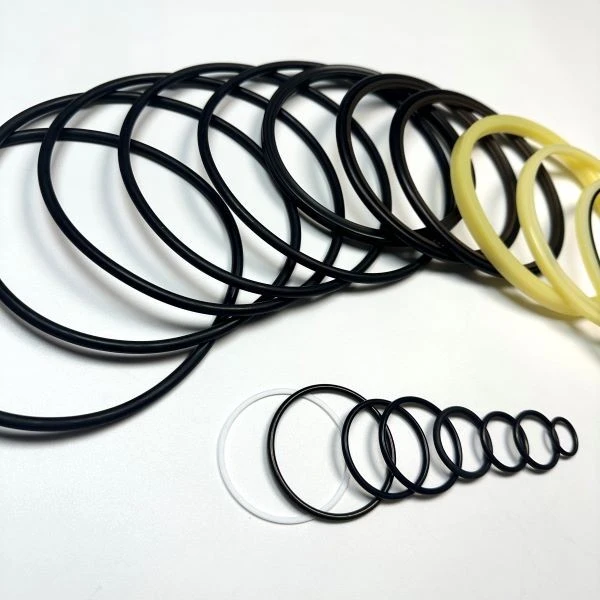
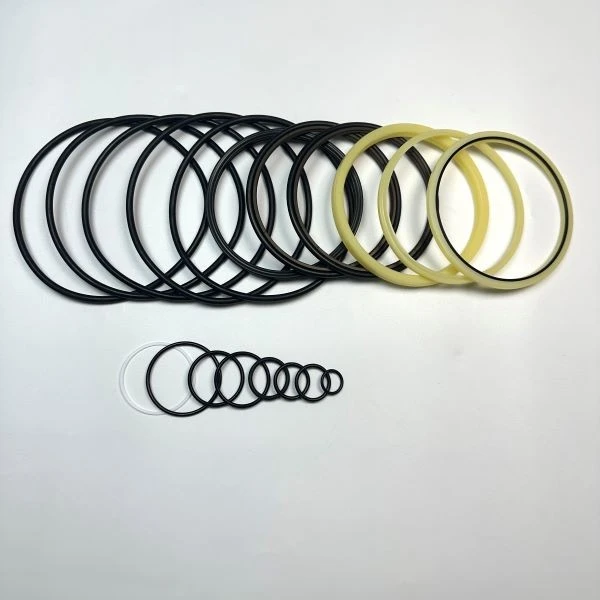
Product Image
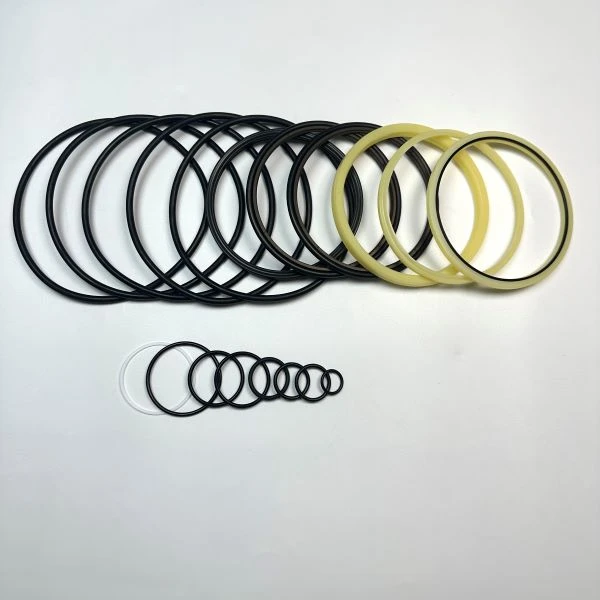
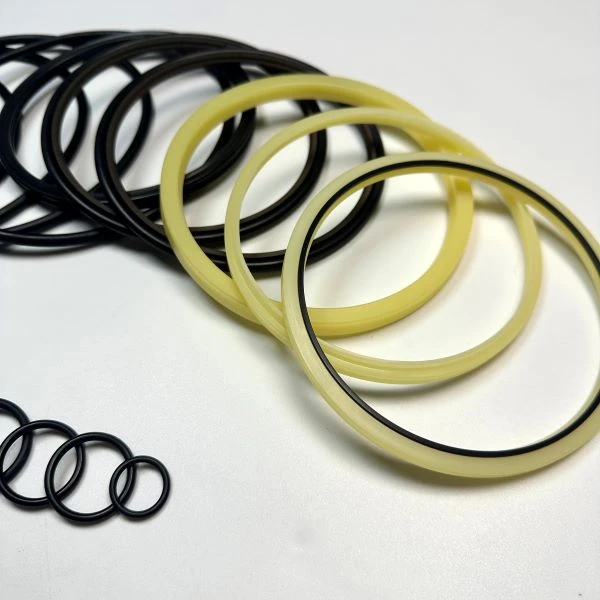
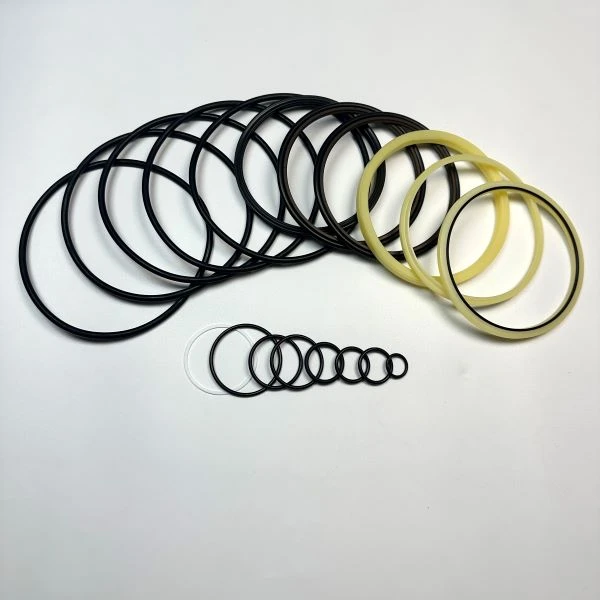
Here are some suggestions for choosing sealing rings for hydraulic breakers:
Consider the material of the sealing ring:
Polyurethane (PU): It has good wear resistance, oil resistance, and anti-aging properties and is suitable for most conventional working environments of hydraulic breakers. For example, on a general construction site, a hydraulic breaker using a polyurethane sealing ring can maintain a good sealing effect and a long service life.
Rubber (such as nitrile rubber): Nitrile rubber sealing rings have good elasticity and oil resistance and have good adaptability to hydraulic oil. The price is relatively economical. However, in terms of wear resistance and high-temperature resistance, it may be slightly inferior to polyurethane materials and is often used in hydraulic breakers with less stringent performance requirements or when the budget is limited.
Pay attention to the size of the sealing ring:
Accurately measure the size of the part where the sealing ring needs to be installed in the hydraulic breaker, including the inner diameter, outer diameter, and thickness. Choose a product with exactly the same size as the original sealing ring to ensure that it can fit closely to the installation part and achieve a good seal. If the size is inappropriate, it may lead to installation difficulties, poor sealing, or even damage to the sealing ring. For example, for the sealing ring at the piston of a certain model of hydraulic breaker, if its inner diameter is 50mm, outer diameter is 60mm, and thickness is 5mm, then when choosing a new sealing ring, these size parameters must be strictly followed.
Understand the structural form of the sealing ring:
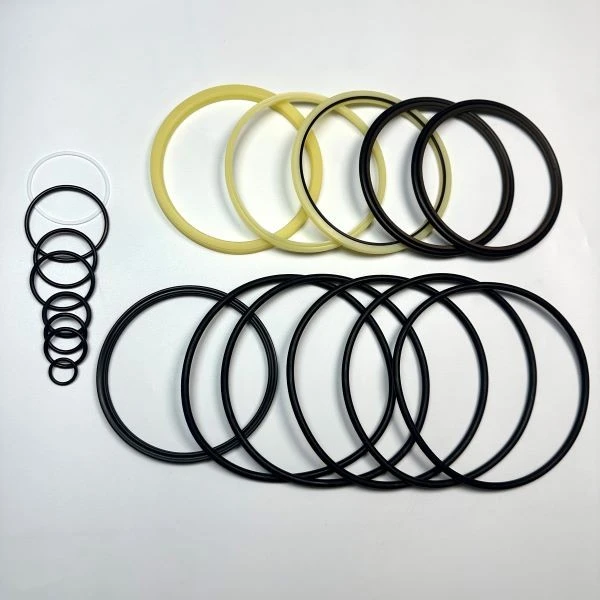
O-ring: It is a common structural form with a circular cross-section. It is easy to install and has good sealing performance. It is suitable for various sealing parts, such as the sealing between the piston and the cylinder.
Lip sealing ring (such as Y-shaped, V-shaped sealing ring): This structure of the sealing ring has good wear resistance and extrusion resistance and is effective in parts with certain lateral pressure or reciprocating motion, like the valve core and valve sleeve parts of a hydraulic breaker.
Evaluate the working environment and operating conditions:
Working temperature: If the hydraulic breaker works in a high-temperature environment (such as long-term operation in an open-pit mine in a hot area), choose a sealing ring material with good high-temperature resistance, such as a special formula polyurethane or high-temperature-resistant rubber material to prevent the sealing ring from softening and deforming due to high temperature and losing its sealing performance; on the contrary, if it is used in a low-temperature environment (such as winter construction in a cold area), then choose a material with good cold resistance to avoid the sealing ring from hardening and cracking due to low temperature and causing sealing failure.
Working pressure: The hydraulic pressure when the hydraulic breaker is working is relatively high. Select a sealing ring that can withstand the corresponding pressure according to the actual working pressure. Generally speaking, the pressure resistance of the sealing ring should be higher than the maximum pressure when the hydraulic breaker is working normally. Otherwise, the sealing ring may be damaged due to inability to withstand the pressure, resulting in hydraulic oil leakage. For example, for large hydraulic breakers with high working pressure, a sealing ring with higher strength and better pressure resistance is needed.
Working medium: Confirm the type of hydraulic oil used by the hydraulic breaker to ensure that the sealing ring has good compatibility with the hydraulic oil. If the sealing ring is incompatible with the hydraulic oil, a chemical reaction may occur, causing the sealing ring to expand, soften or harden, thereby affecting the sealing effect and service life.
Dust and impurities: If there are more dust and impurities in the working environment of the hydraulic breaker (such as on a dusty construction demolition site), then choose a sealing ring with good dustproof performance, or add dustproof design to the sealing ring structure, such as a sealing ring with a dust lip, to prevent dust and impurities from entering the sealing part and wearing the sealing ring and related parts.
Choose a reliable brand and supplier:
Well-known brands of sealing rings usually have more guarantees in quality and performance. They often have strict quality control systems and rich production experience. For example, brands such as NOK in Japan and YBS in South Korea have a good reputation in the field of sealing rings.
Reliable suppliers can provide products with stable quality and can provide better guarantees in after-sales service and technical support. You can evaluate and choose by checking the supplier's qualifications, customer evaluations, and industry reputation.
Check product quality and certification:
Check the appearance quality of the sealing ring. It should have a smooth surface, no bubbles, cracks, impurities and other defects. These defects may affect the sealing performance and service life of the sealing ring.
Understand whether the sealing ring has passed relevant quality certification standards, such as the international standard ISO 9001. Certified products are more guaranteed in quality.
Choosing Netbell won't be wrong
Hot Tags: nok seals for dmb-180 hydraukuic breaker, China nok seals for dmb-180 hydraukuic breaker manufacturers, suppliers, factory, CT-195, Nok Seals for Daemo Breaker Hammer, Bks Seal Kit for Daemo Alicon Breaker, DM 210 DMB 140 DMB 220 DMB 230, Autxo Diaphragm for Okada, SB 40 SB 50 SB 81 SB 100 SB 131 SB 151 SB 151 9T SB 200